From Accra to London: How Themanyphacedgod Is Building a Creative Practice Across Worlds
Samuel Kobina Blankson’s path as an artist has carried him from Ghana to England, yet the relocation has not meant abandoning his creative roots. Known professionally as Themanyphacedgod, the self-taught Ghanaian artist now lives in London, where he keeps developing a practice shaped by personal experience, music, memory and the urge to express himself truthfully.
His work has been exhibited at Lokko House, Kukun and the Art Gala in East Legon, and his creative efforts have also led him into music through collaborations with artists such as Black Coffee, Themba and Fameye.
To Blankson, the various sides of his creative life are not necessarily distinct. Music can shape how he approaches a painting, while his experiences and surroundings keep influencing what ultimately shows up on the canvas.
Showing his work in Ghana mattered greatly to Blankson, since it let him display it in the very setting that helped form his identity as an artist. There was something humbling about returning paintings that had grown out of his own experiences to the people and places that were part of those experiences.
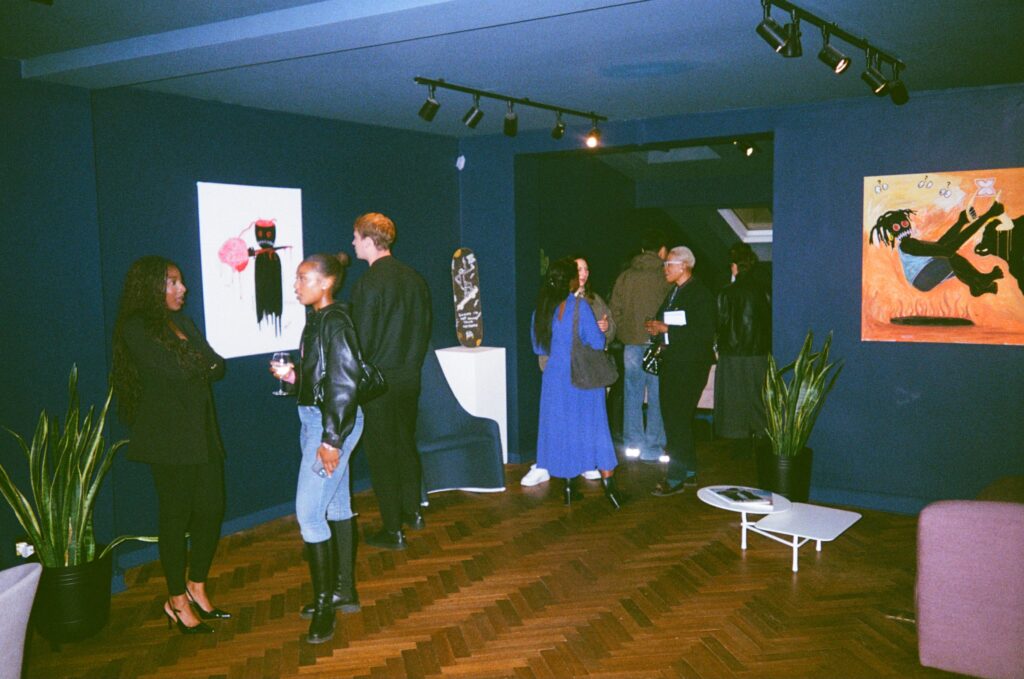
Blankson takes pleasure in seeing how differently people can react to the same painting. One viewer might dwell on a specific figure, another might spot a symbol, and yet another might feel an emotion the artist never anticipated they would notice.
That is one of the things he loves about art. A piece may start from a personal experience, but it does not have to end with the artist’s own reading of it.
Blankson’s creative bond with music has also deepened over the years. His collaborations with Black Coffee, Themba and Fameye arose mostly from mutual respect and shared creative networks, yet music has shaped his visual work in other ways as well.
He reacts to the emotion and movement he hears in music, translating those feelings into colours, symbols, textures and forms. He calls it a conversation without words, in which a sound can give rise to an image without that image being a literal depiction of the song.
This has let him move easily among different creative spaces while keeping his own identity as an artist.
When Blankson began exploring digital art, Ghana already had artists pushing the medium in different directions. Ian Quachi, Bright Ackwerh, Kweku Darko and Adobe Messiah were among the artists whose work showed him that digital art could be taken seriously as a creative practice.
Seeing what other Ghanaian artists were doing gave him the encouragement to keep developing his own work. He believes creatives should be able to create fearlessly and put their ideas out without being too concerned about whether they fit an existing mould.
To Blankson, art is not simply something you produce. It can also become something that transforms the person who makes it.
That conviction has stayed with him as he has moved from Ghana to England and carried on developing his practice.
Blankson’s ambitions reach beyond his own paintings as well. He hopes one day to establish a gallery space where emerging artists can exhibit their work and connect with audiences.
This idea stems in part from his own journey. While he was still working out what was possible, other artists gave him something to look toward, and he would like to offer that same opportunity to someone else.
He is also open to working with fashion brands, musicians and galleries in the future as his practice keeps evolving.
London offers another setting in which to explore those possibilities, yet Ghana remains a vital part of the story. His time in Accra, the artists who shaped him and the life he continues to live in England all feed into the same body of work.
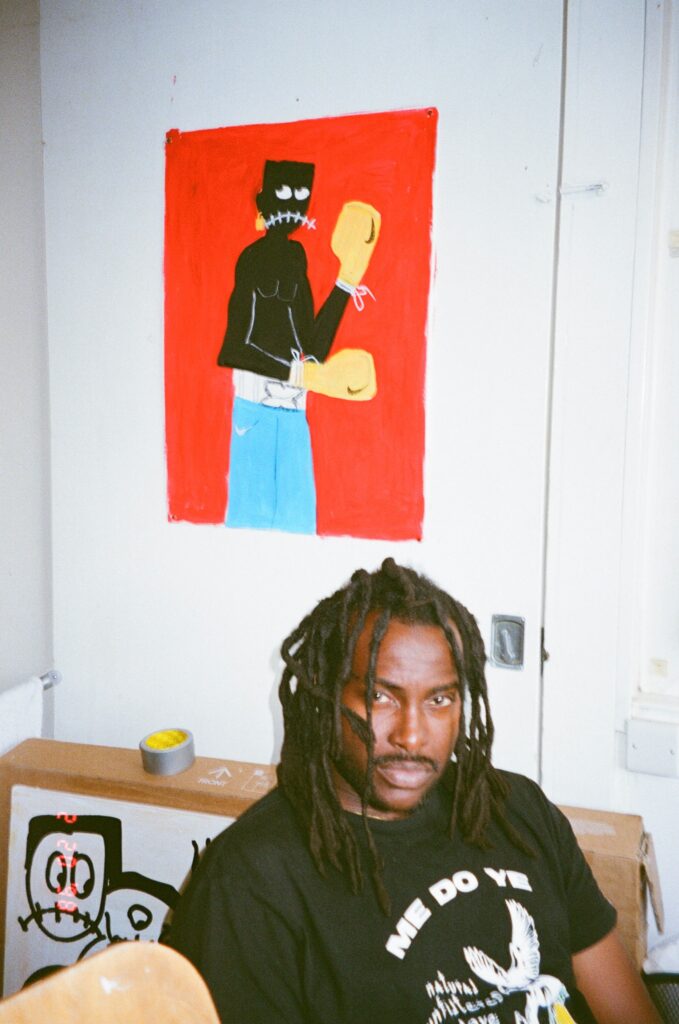
Blankson sees expression as essential and still regards life as his greatest muse. His work, then, does not have to choose between the places he has come from and where he is now.
From exhibitions in Ghana to collaborations with musicians and his ongoing development in London, Themanyphacedgod is still building his creative practice. The direction may keep shifting, but his commitment to freedom, honesty and self-expression stays at the heart of it.
Written by Kodwo Amos