
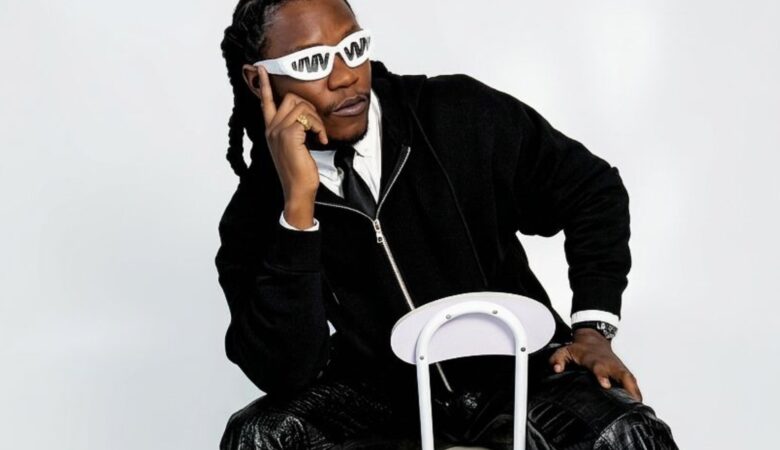
From the very beginning, Tobi Peter was drawn to music. As a kid, he explored that interest by finding plastic containers, arranging them by pitch, recording the sounds on his phone, and saving them. Even though he had no way to assemble these sounds into music, he had a restless desire to escalate his curiosity into creation as he wasn’t satisfied with just being a listener. You see, If Tobi loves something, he’s going to figure out how it works. And once he does, he has to create in his own way.
That instinct also makes him resistant to paths already mapped out for him. As a kid who loved drawing, his parents expected him to become an architect, but he refused. As a tech graduate who loved computers, he walked away from a well-paying job at Interswitch to pursue a career in music. As a producer, he found pockets of success, but wanted more than to remain a behind the scenes figure. And as a DJ gaining ground in a deeply secular EDM scene, he chose to push further, donning a priestly collar and openly waving the flag of his Christian faith.
I connect with Tobi Peter over Google Meet on the heels of his sold-out Gospel House concert in Nairobi, Kenya. Gospel House is Tobi‘s brainchild, an event where he performs music that blends electronic music with gospel records. He plays his EDM remixes of popular Christian songs to much fanfare as evidenced by clips from the event which have attracted millions of views and comments in languages he doesn’t even speak. This is the sixth edition, and the first to leave Nigerian soil.
As we settle into conversation, he reflects about what the Kenya show represented. The venue, Koda Nairobi is a Nightclub that was repurposed to meet the requirements of that event. As a result of that, the event required some PR to convince skeptics that yes, you can have Christian events outside the church. The production was the cleanest Gospel House has seen: lasers, lighting rigs, multiple cameras capturing every moment. And for the first time, he invited the audience onto the stage with him, something he had never done at previous editions.
“It made me realize how much people are rooting for this,” he says.
But Gospel House is only the most recent chapter in Tobi‘s career. To understand how Tobi arrived at a sold-out show in Nairobi, wearing his signature blue Agbada and playing EDM remixes of worship songs to a crowd that knew every song, you have to go back to a kid in secondary school who loved computers a little too much.
In secondary school, Tobi was the kid who used PowerPoint to create games. While the software is often used for creating presentations, he had spent so much time dissecting the software that could use macros. He built “Who Wants to Be a Millionaire” clones and jumping games using the software. He also taught himself to code, built websites, and spent so much time in the computer lab that the school made him perfect for it. He was a nerd by all definitions of the word.
Despite this, his passion for music never waned. When he got to university, he met Kamsi Kodi.
Kamsi knew about music production and was passionate about programming but couldn’t code. Tobi could build websites but didn’t know how to make music, so they swapped skills. Tobi taught Kamsi web development and Kamsi taught Tobi about FL Studio. As is typical of him, Tobi went all in. By his own count, he’s made over 1,000 beats starting from 2015.
However, it wasn’t until 2019 that he would release his debut single on DSPs, a song titled life which features Danty, Snappa and Joy. The song is an EDM record built around a breakup voicenote sent to Danty. “As I was hearing the girl rant, I was hearing music in my head”. The song offered Tobi his first taste of virality as it quickly spread across the University and was everywhere on campus.
The record also leaned into his heavy obsession with EDM. There’s not exactly a strong cultural precedent for a Nigerian kid in the mid-2010s to be obsessed with EDM considering the fact that Afrobeats was the dominant sound and acts like 2baba, P-square, D’banj, Wande Coal Wizkid and Davido were the blueprint for every young Nigerian musician. But Tobi wanted what he saw in the EDM world: DJs who headlined festivals, who went on world tours, who built entire careers around performing. He names drops acts like Avicii, David Guetta, Diplo, Major Lazer, Skrillex, Calvin Harris as figures he admired and whose feats he wanted to replicate.
He tried twice to formalize this obsession into a duo similar to The Chainsmokers. The first attempt, “Tobi and The Medix,” collapsed when his partner went through personal issues and asked to discontinue the duo group. The second, “Octave,” with a friend named Bolaji Ayeni, never got serious. They were just catching cruise, not building anything sustainable. Both attempts taught him the same lesson: if you want something done reliably, you have to be able to do it yourself. He has stuck to this principle religiously till this day. “I edit my videos myself. I design my graphics myself. When I want to do something and have to wait for somebody to do his own part, it slows down the process and that really drains me” he tells me.
But the failed attempts to establish a duo didn’t affect his passion. He kept making beats, consistently improving and trying to figure out how he could turn his obsession into something that could move him through the world.
While he was getting better as a producer, he came to the realization that didn’t quite align with the future he envisioned for himself. Most producers, no matter how good, don’t headline shows. They don’t go on tour. They don’t travel based on their own draw. “You can never see someone like P2J touring and traveling based on a headline show,” Tobi explains. For him, he wanted to be on stage, he wanted to tour, to travel, to cultivate a fanbase. He didn’t want to be just a guy behind the scenes creating cool stuff. He needed to be on stage. And so he needed a format that allowed him to be a performer, not the guy in the studio engineering someone else’s moment.
So he tried singing. It wasn’t exactly terrible, but it wasn’t great either. “I was such a dead guy, man,” he says, laughing at the memory. “I knew my voice was ass. But I just didn’t want to be behind the scenes.” He remembers opening for Ayra Starr at a show as one of the peak moments of his career as a singer. He did a few shows here and there, but being a singer wasn’t quite the right fit. His voice wasn’t the right vehicle and standing on stage trying to force it felt like the wrong answer to the right question.
The right answer, he realized, was already happening in the industry. Producers who wanted to perform were becoming DJs. It was the pipeline: learn to DJ, use the DJ sets to play your own productions in contexts where you control the room. Sarz is a prime example of a Nigerian producer who would eventually make this transition and enjoy incredible success. His acclaimed sets like Boiler room in 2024, Obi’s house in 2023 and Mixmag lab London in 2023 have attracted millions of views and generated immense fanfare.
Tobi realized that to be front-facing as a producer, you had to add DJing to the skill set. So Tobi taught himself. YouTube tutorials, Virtual DJ, hours of practice in his room. No mentor, no formal training, just the same obsessive self-education approach he’d used for FL Studio, for web development. He bought a controller. He learned to beatmatch. He studied transitions. And when he felt ready, he started looking for opportunities to play in front of actual people. The opportunity came through a remix.
In 2021, Tobi made a remix of “Bloody Samaritan” by Ayra Starr. He posted it as content, the way he’d been posting remixes for months. The remix went viral, viral enough for people to notice that there was a cool new guy on the scene doing EDM. As a frequent raver, Tobi had always been adjacent to the Lagos rave scene but was never an active participant. He had attended raves like Element house, Activity Fest and the likes. Parties where you showed up early, paid your ticket, and lost yourself in the music. He didn’t know any of the organizers. He was just a guy who loved the culture. But after “Bloody Samaritan” blew up in the EDM community, the organizers knew him. Mazexmxtreme reached out: if you ever want to perform, there’s always a slot for you at Zodiac Party.
Zodiac Party was one of the events Tobi used to attend. Getting an invite to DJ there felt surreal. Even though he knew he was going to be an opening act as nobody knew his name as a DJ yet, he was excited about the opportunity. He showed up early with his friends and was asked to do a back-to-back set with Dyslex. The set was rough. “I made a lot of mistakes, man,” he admits, but it was still a massive milestone. He was finally DJing at a party he used to attend as an audience member. The fact that only a handful of people were paying attention didn’t matter.
After Zodiac Party, more invitations came and Tobi started playing sets at the parties he used to rave at. Usually showing up in full agbada now, playing for small crowds, connecting with people in the community, learning the craft in real time.
But there was a complication: he still worked at Interswitch.
His job was a corporate tech role, nine to five, great pay, the kind of position that made his parents proud. After work, he’d go straight to whatever rave was happening that night. He’d DJ, or just be in the crowd, and then he’d be back at the office around 4 a.m. The security guards knew him by name because he had to call them to let him in. Sometimes all the napping beds in the office were taken by people working legitimate night shifts, so he’d sleep on the couch/floor. Then he’d wake up and work his shift.
He lived with his parents on the mainland which made going back home after a rave and coming back to the Island for work the next morning logistically unsustainable. So he just slept at the office. For two years, this was his life: tech bro by day, raver by night.
Playing frequently at raves significantly boosted his profile. His videos began performing well online while blogs were consistently picking up his remixes. Soon, his colleagues at Interswitch became aware of his life outside the office as he could not hide it anymore. But his growing success in nightlife created a new problem. His role at Interswitch demanded precision and constant alertness as he handled sensitive financial transactions. One day, exhausted from a rave the night before, he made a sensitive mistake, the system flagged it immediately. What followed was swift: escalation protocols, managers called in, investigations opened, explanations demanded.
It was then he realized that his focus was slipping and the demands of both industries was taking a toll on him. The logical thing to do for him would have been to resign but such a move felt reckless as he had already quit music once before when he tried to go full-time as a producer. It didn’t work out and he swiftly returned to LinkedIn to find another job. He wasn’t eager to repeat that experience. Then two things happened that made the decision unavoidable.
The first sign came from a restaurant in Victoria Island called The House reached out with an offer to DJ every Thursday for four weeks. The pay they quoted was relatively close to what he was making monthly at Interswitch. Tobi did the math. He’d work one night a week for a month and make nearly the same amount he earned working forty hours a week in corporate. “Wait,” he remembers thinking. “You mean I would just come and DJ once a week for four weeks and get this amount of money?” The economics were suddenly visible. If venues were willing to pay him that much based solely on his growing online presence, then DJing wasn’t just a side hustle. It was a viable primary income source. He just needed to free up time to take more bookings.
The second sign came when he got a follow back by Don Jazzy on Instagram. It was a very happy moment for him and he happened to be at work when he got the notification. Upon seeing the notification, he stood up silently and went to celebrate with his friend Fisayo at her workspace.
The third and more important sign came later. His father was pushing him to do a master’s degree as his older brother had already gone to Canada for similar reasons. Now it was Tobi‘s turn. He applied to universities in the UK for artificial intelligence programs – he’d loved the AI course in university and wanted to go deeper. He got some admissions. His father wanted him to take one. But Tobi couldn’t shake the feeling that leaving Lagos now, just as momentum was building, would kill everything he’d worked toward.
So he made a deal with God.
“I said: God, if you want me to actually double down on tech and become an engineer and build systems, let me get this admission to Canada. Let me know that this music life, I believe in, is not the path. But if you don’t want me to become a tech bro, don’t let me get this admission. Let that be my sign to lock in and do music full-time.”
He applied to a school in Canada. He waited. The admission never came. “I was like, okay. You’re not going to any stupid school again,” he says. “I locked in and just doubled down on the music.”
The prayer wasn’t casual. For Tobi, his faith has always been the framework through which he makes major decisions. Years earlier, as a kid watching MTV Base, he’d prayed a specific prayer: “God, please let it be my talent that makes me leave this country. Not school, not a master’s degree. My talent.” The Canada admission test was an extension of that same prayer, a way of asking God to confirm the path through concrete yes-or-no outcomes.
“I kept praying to God to bless my music,” he explains, “but the physical actions I was doing, applying for masters, chasing tech jobs, were pushing me towards the tech side. It was like, one or the other.” The failed admission gave him much needed clarity. But committing to pursue a career in music came with a tension many believers in this space contend with: how do you stay publicly Christian in a deeply secular industry? “As a Christian, you always get to that point in this industry,” he says. The clubbing, the late nights, the content, the lifestyle all feel incompatible with Christian values. But his conclusion was that the solution wasn’t to leave the industry. It was to be the light in it. “Music is one of the highest forms of worship,” he points out. “Why not stay where you are and be the light in your environment?” To that end, Tobi doesn’t compartmentalize. He doesn’t have a “Christian life” and a “DJ life.” He brings the whole self to everything he does, and he has been incredibly successful so far.
Tobi resigned from Interswitch and took The House residency. It went well. Other bookings started coming in. Then came the offer that formalized everything: a Sunday residency at Good Beach. An Even in the day set he’d played had gone so well that Good Beach wanted that energy every week. The sales were strong and the crowd showed up. They gave him a regular slot, and for the first time, Tobi had predictable income from music alone.
The international shows followed almost immediately. First Ghana for Even In Accra. Then Tanzania, then Saudi Arabia, then Qatar and the bookings kept rolling in because he’d built something venues wanted: an audience that actually showed up and a recognizable visual brand. The career he had envisioned by studying Diplo, the multiple-country touring DJ who built a fanbase through performance, not just records, was actually happening.
The full-circle moments started stacking. Interswitch, the company he’d left behind called him back to perform at their corporate event. The CEO even gave Tobi his personal phone number. “This is access I didn’t have when I was a staff,” he laughs. “Now we’re chatting on WhatsApp.”
He made a remix of Major Lazer’s “Lean On.” Diplo commented on it with “fire”. One of the
Major Lazer members asked for the file. Then there was a video: Diplo playing Tobi‘s remix in Italy, the crowd going wild, the record Tobi made in his room in Lagos now moving a festival audience. “My Twitter header is literally that Diplo comment,” he says. “It keeps me going, man.
One day I used to always tag him in remixes. Now he’s spinning my remixes.”
But the biggest milestone, the one that would define this phase of his career and resolve the faith tension he’d been carrying, came from an unexpected place.
In 2025, Tobi heard Yosa spin a remix of “Come and see the Lord is good” at a rave and the audience went crazy, it piqued his interest that such music was well received at a rave.
He had made a remix of “Desire” by Limoblaze that went viral the previous year.
After seeing that done by Yosa, he went ahead to make a 3 step Afrohouse remix of “Favour” by Lawrence Oyor and it went viral. People came up with all forms of dance routines for the remix and there was so much demand for more. The comments were overwhelming. Tobi then realized he’d been sitting on an untapped demand. There were Christians in the EDM scene who loved the music but felt conflicted about the secular context. And there were Christians outside the scene who’d been told that clubbing and raving were inherently sinful, but who were drawn to the energy and community those spaces offered.
Instead of making individual remixes and posting them as content, Tobi decided to do something bigger: a live event where he’d play an entire set of Christian EDM. He’d call it Gospel House.
He made the flyer. Posted it. The reception shocked him. The first edition went really well. Tobi posted a clip of the set from the first edition on TikTok. It currently has 2.7 million views on TikTok, his most-viewed post ever. The demand was so strong that Tobi ran it back. Edition two. Edition three. Six editions in, each one self-funded. He budgets around ₦500,000 – ₦1 million per event and doesn’t take profit. Gospel House isn’t a business. It’s a ministry quite similar to a rave.
By the sixth edition, it was ready to travel. Gospel House did what Tobi always believed was possible: it proved you don’t have to choose. You don’t have to be the Christian who quits music to become a pastor. You don’t have to be the DJ who hides his faith to keep bookings. You can be both. You can bring the whole self. And if the industry has a problem with that, the industry can adjust.
But Gospel House, for all its impact, also highlights a structural problem in the Nigerian EDM scene, one Tobi is acutely aware of as he looks toward the next phase of his career.
“We need our own records that are played on dance floors,” he says. “If you come to South Africa, a lot of South African guys won’t book Nigerians. Because when you come here, what are you playing? You’re playing our songs. Why should we book you? We have Dlala Thukzin at home”
It’s a valid critique. Nigerian DJs are traveling, yes. They’re getting international shows. But they’re often playing Amapiano from South Africa, Afro-house from Kenya, EDM from Europe. The export pipeline is one-directional: Nigerian DJs consume global dance music and repackage it for Nigerian audiences. But there’s no equivalent flow of Nigerian-produced EDM records breaking into international sets. Tobi points to the few exceptions, Blak Dave’s “The Third Step” project, NHF’s “Fokasibe” and Jamie Black’s “Ogba”, which are gaining traction across the continent as proof that it’s possible. The Nigerian EDM scene has proven it can build audiences, sell out shows, and create sustainable DJ careers. Now it needs to prove it can export records.
For now, Tobi is focused on what he can control: making records, playing shows, and proving that the kid who beat plastic containers in his parents’ house was right to trust his instincts.






Leave a Reply